
Tea,drums and rangoli: these stewards of culture and heritage are being honoured for preserving tradition in Singapore (Asia One 28 March 2025)
In a place as urban and fast-paced as Singapore, it can be easy to forget how rich our sunny island’s cultural heritage can be.
Beneath its big city surface, there is still a vibrant pool of people who are working hard to keep our many traditions alive — and maybe even elevate them.
To recognise these efforts, the National Heritage Board (NHB) will be awarding the Stewards of Intangible Cultural Heritage (ICH) Awards for 2024 to five recipients.
The award ceremony will be held at the Ngee Ann Kongsi Auditorium at National Gallery Singapore on April 2.
Each recipient will be awarded a trophy, certificate of award and $5,000 cash prize in addition to an option to get up to $20,000 in project funding (subject to approval).
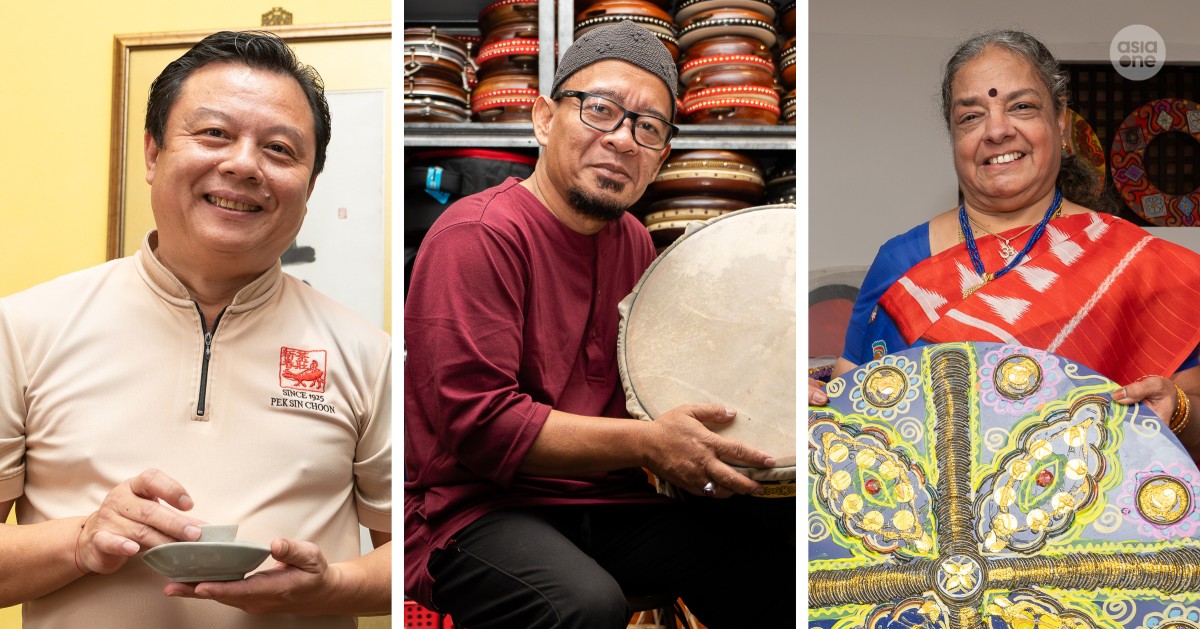
Among the recipients of the award, which was launched in 2019, are three cultural stewards — each with their own unique way of preserving their respective craft and traditions in Singapore.
Rangoli art with Vijaya Mohan
For Guinness World record-holding Vijaya Mohan, combining modernity with tradition also plays a big part in her efforts to conserve traditional Indian rangoli in modern day Singapore — but it’s also important to remember the roots of the artform.
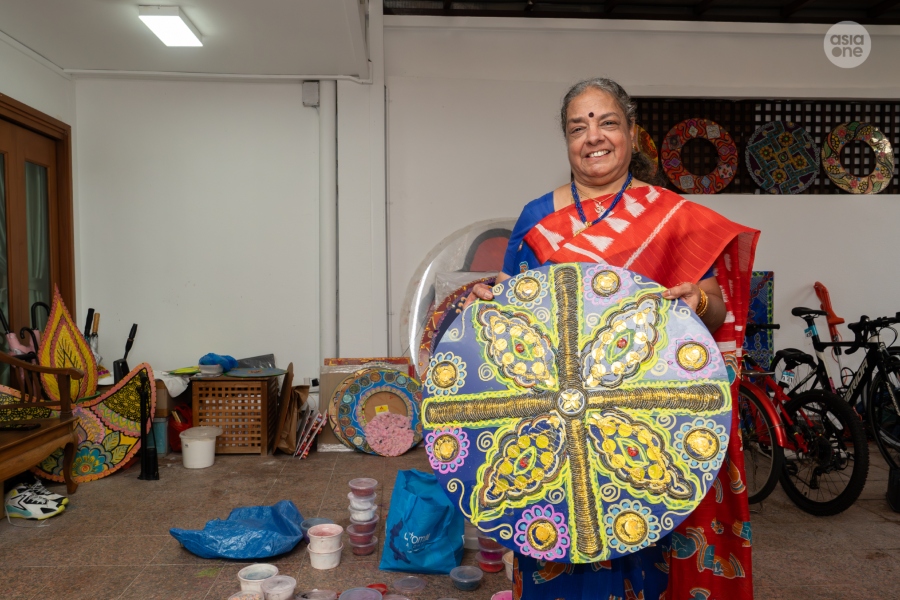
Speaking to AsiaOne, she shared that while she’s currently open to “more modern designs and adaptations” to bring the art to as many people as possible, the traditional aspect of it all remains “important and holds a lot of value”.
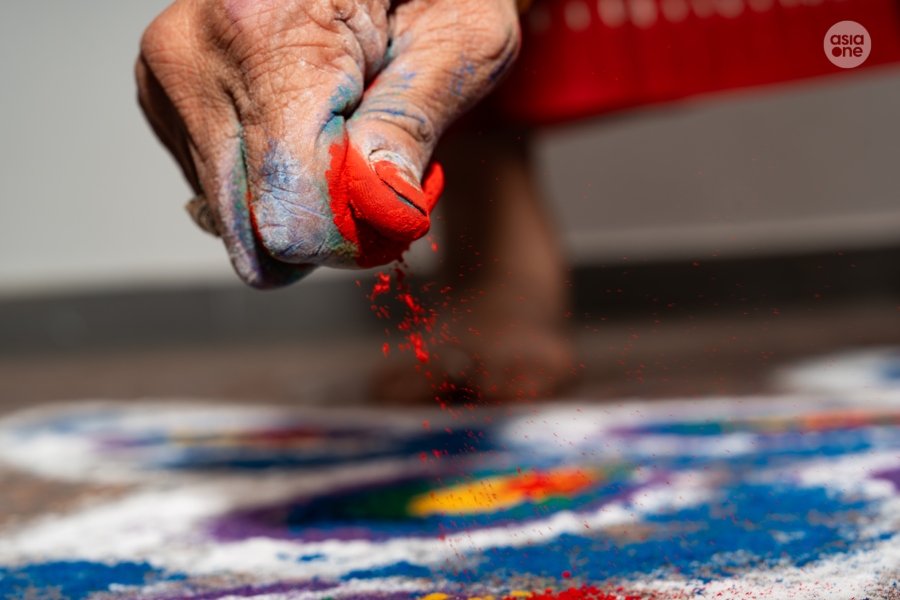
As a community artist and art therapist, Vijaya encourages the people around her to embrace the nuances in evolving rangoli art.
“I go to the latest [trends] and then tell them you can do it the modern way, but this is the traditional way [and] it has got so much value. So we can take a step [towards] the modern [adaptations] and then we can come back [to tradition],” she stated.
When it comes to Vijaya’s own rangoli art, she also incorporates a variety of innovative ideas to keep up with the ever-changing times.
While rangoli is traditionally made with powders like rice flour and chalk, she has created several art pieces with “as many unconventional materials as [she] can” — from CDs to lipsticks, sugarcane and even sarees.
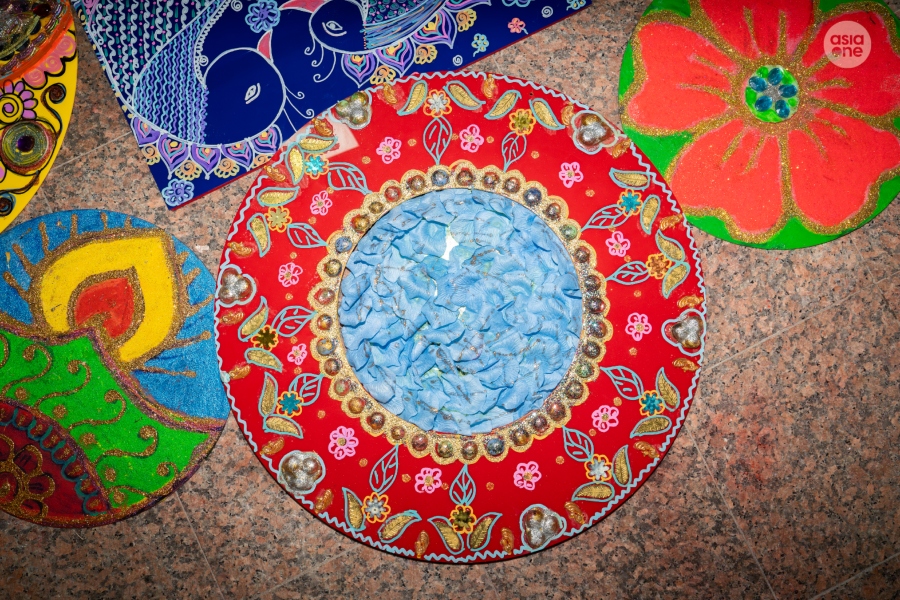
To advocate for sustainability, she has also used recyclables like water bottles, caps and styrofoam boards.
Seeing as to how we’re now in the digital age, the artist also experimented with new-age technology like VR rangoli.
In 2021, the artist collaborated with an electronics company to create a “dancing rangoli” experience where a pad is attached to a screen, and when the participant dances, digital rangoli designs will show up on it.
According to Vijaya, it was very well received.
And while she recognises that the new concept might be attractive to many people, Vijaya doesn’t forget to emphasise the need to educate the public about the true essence of the artform and how it’s still appealing to the masses.
“I will talk to them, explain the spiritual, emotional, psychological [and] physiological value of rangoli. So that I can attract more people,” she shared.
As for the future of rangoli art in Singapore, Vijaya isn’t concerned.
According to the artist, on her visits to many schools around the country and even abroad, she’s seen an influx of interest coming from students from kindergarten to universities.
“Teacher, I saw you. How do you do all these things [rangoli], I want to learn,” she quoted some students saying.
As the founder of Singa Rangoli — a group dedicated to exploring innovative ideas and approaches to traditional rangoli in Singapore — Vijaya is also actively educating and expanding the community to preserve this tradition.
“Wherever I go, if anybody says I am interested [in rangoli], immediately I will bring them [in],” she stated.
“I started 10 years ago with about four to five people, now I have about 35,” the artist shared.
As a recipient of the ICH award, Vijaya feels “happy and honoured” as “it’s a recognition” of her work that would at the same time help spread the craft.
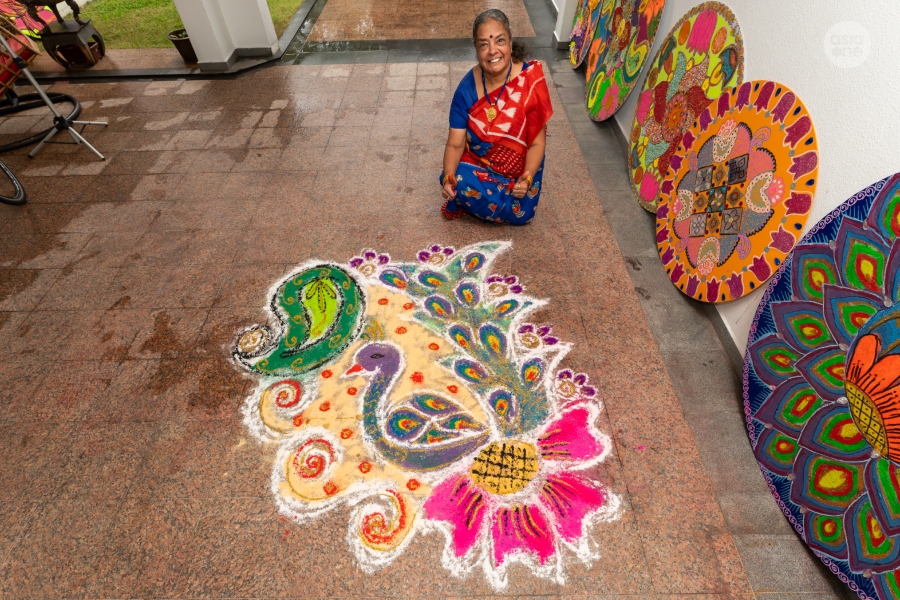
She hopes that it would encourage younger generations to “start developing the habit of creating”.
Leave a Reply